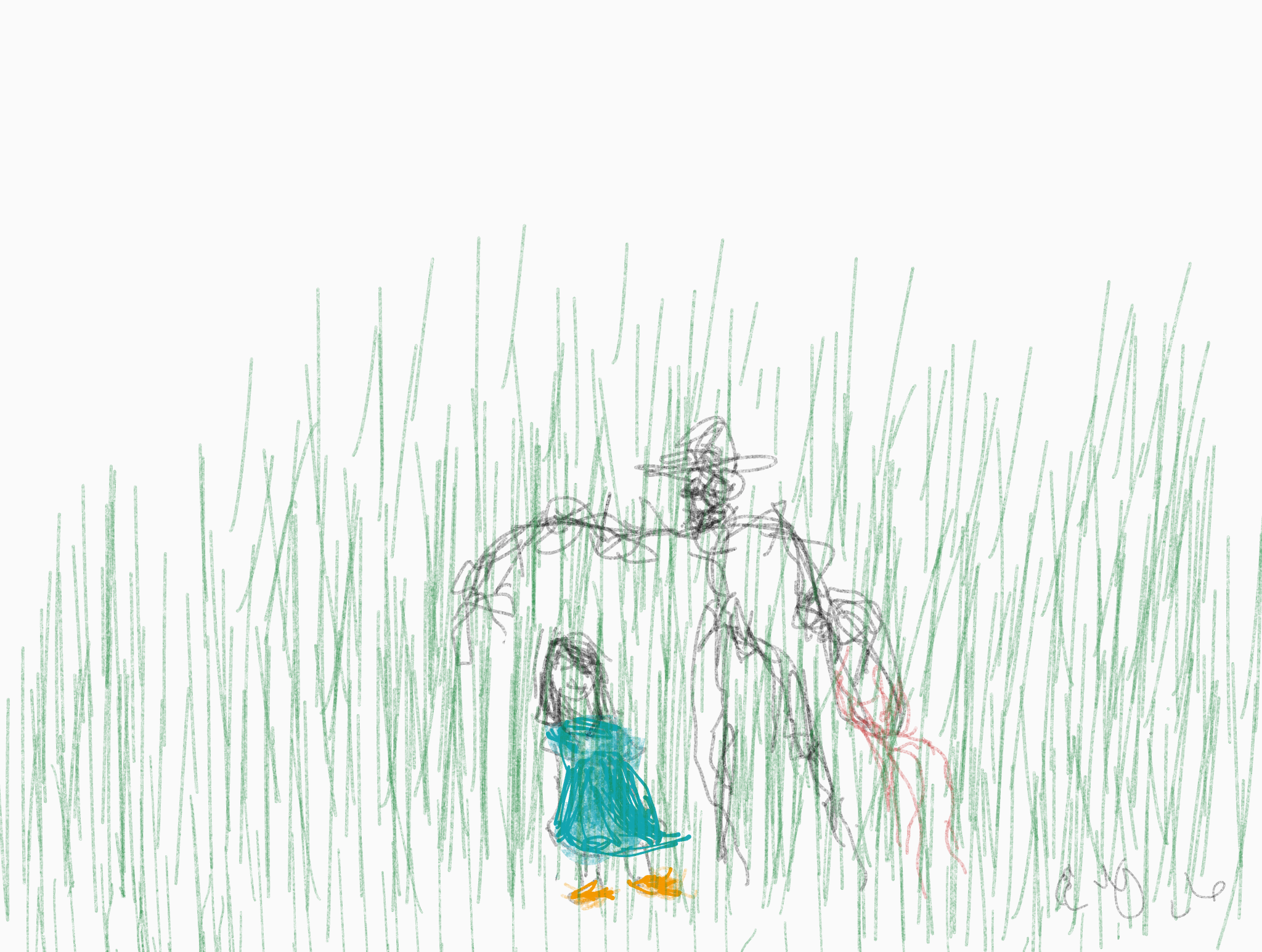
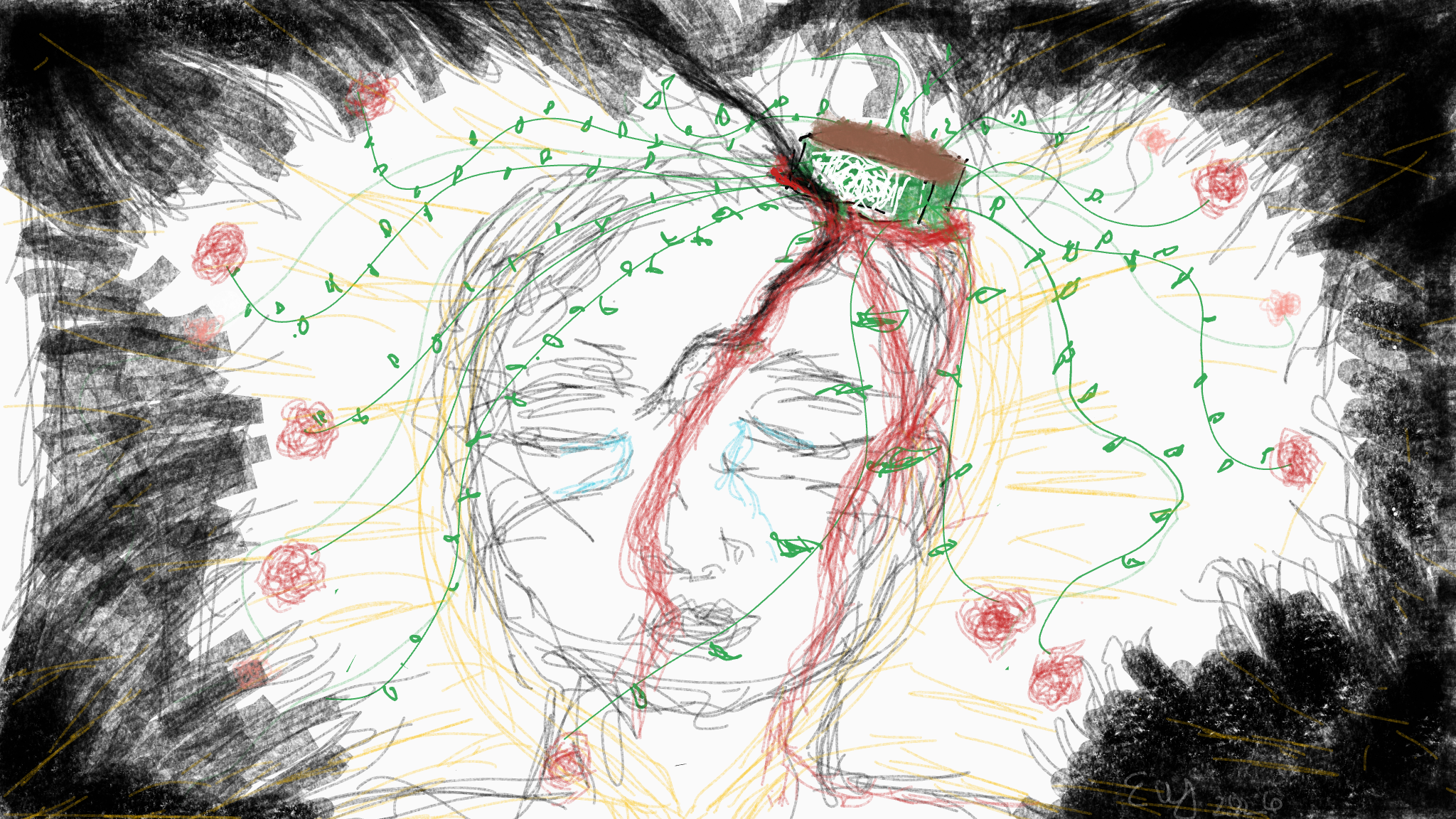
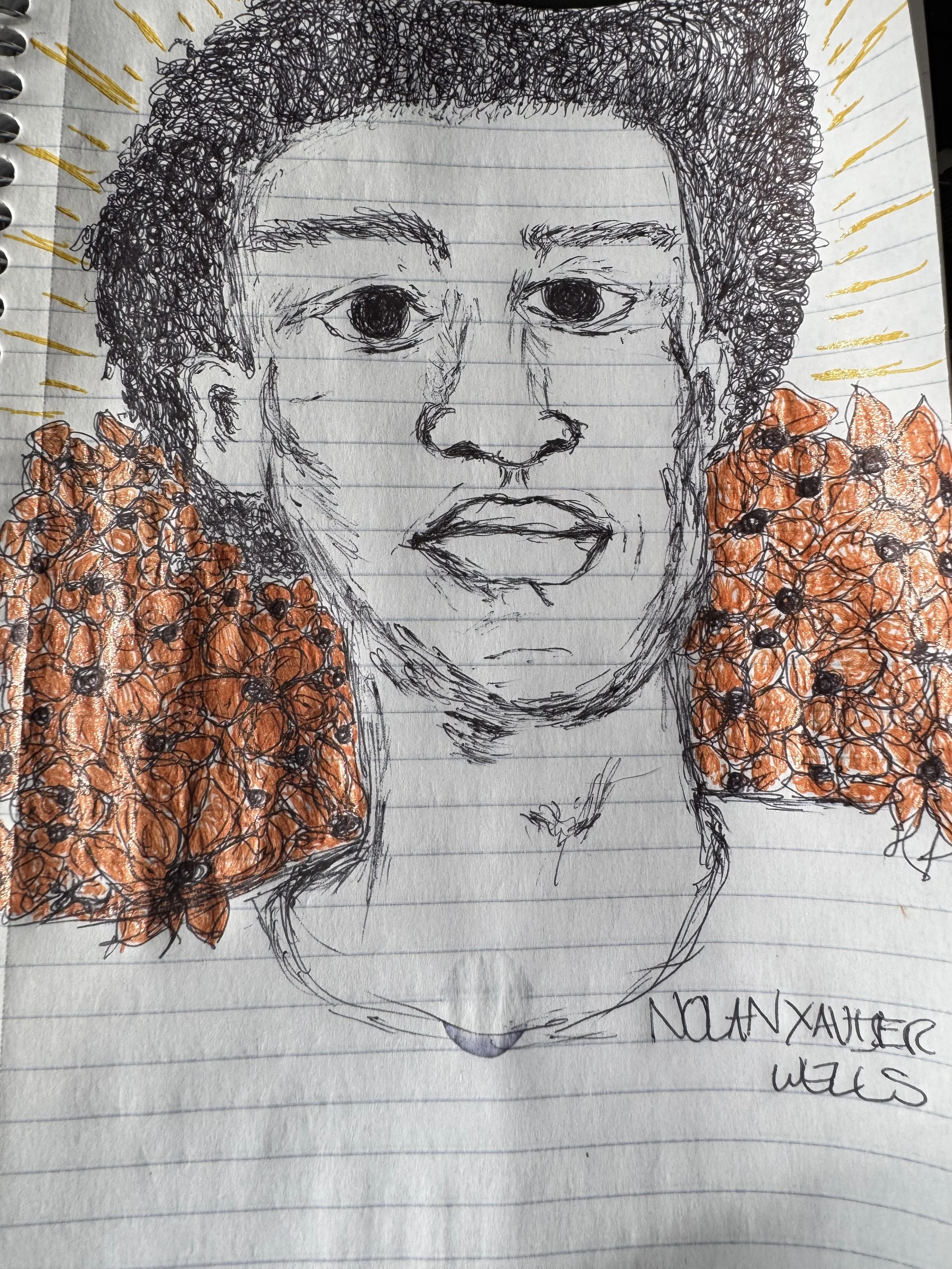
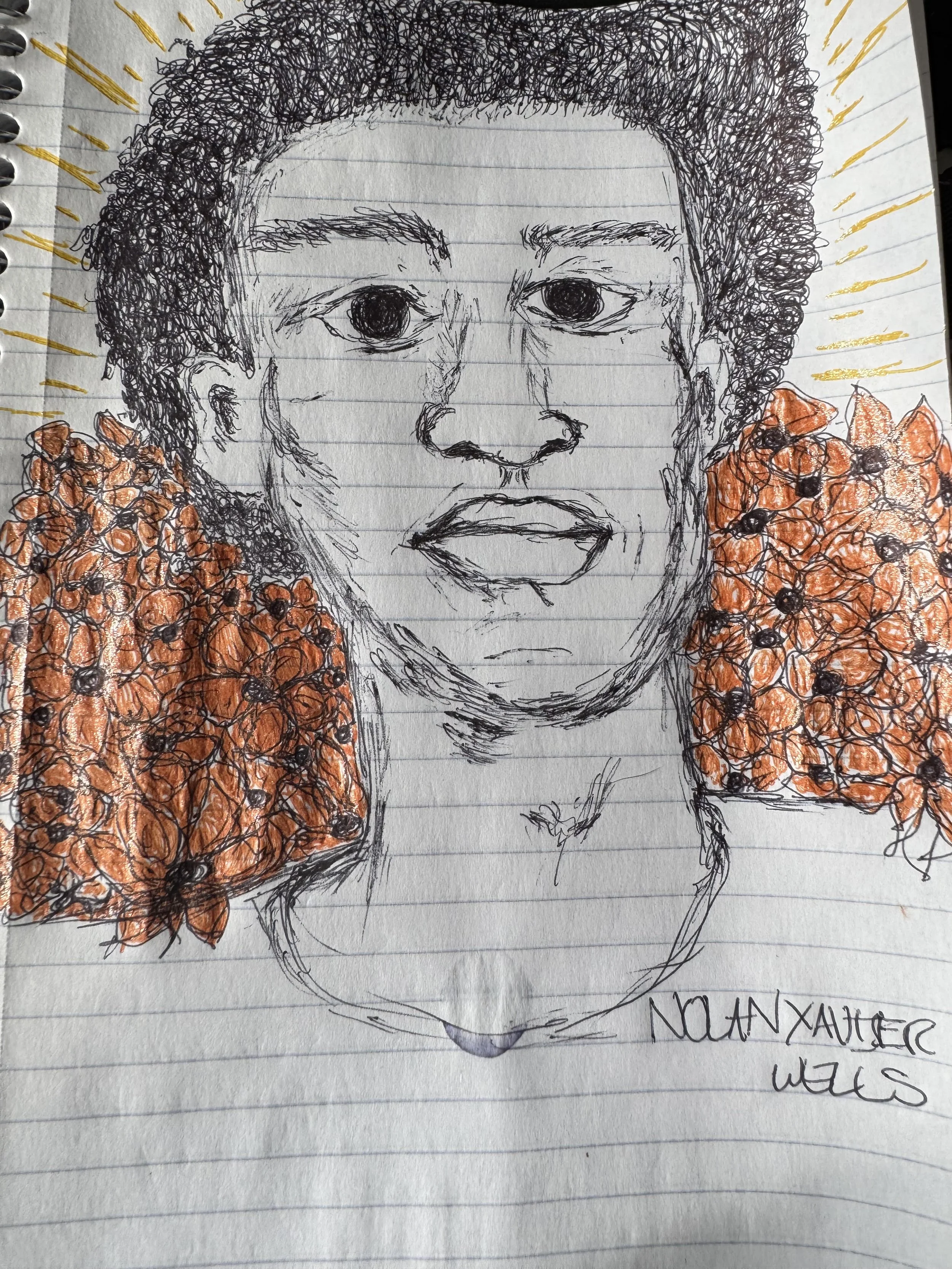
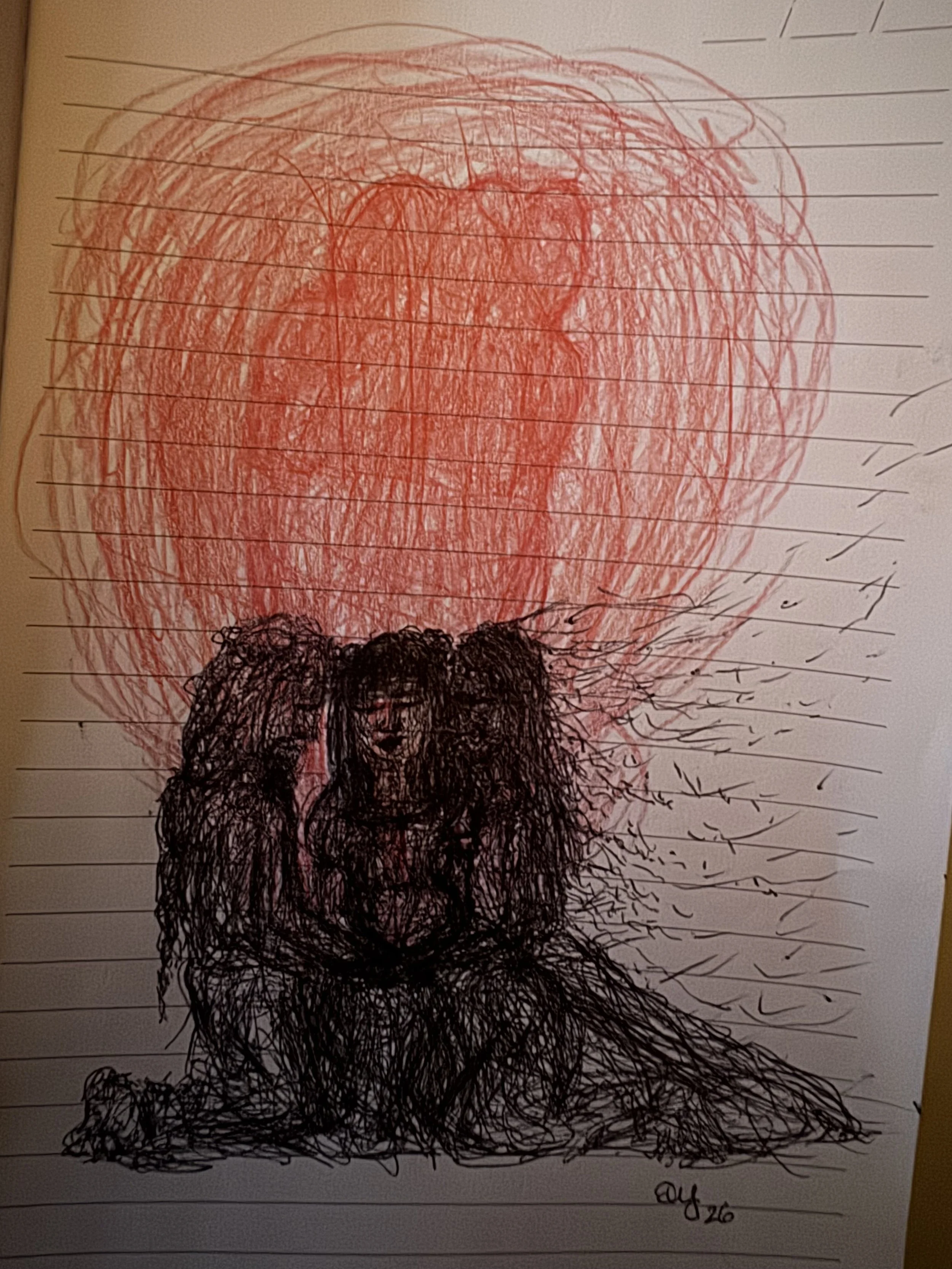
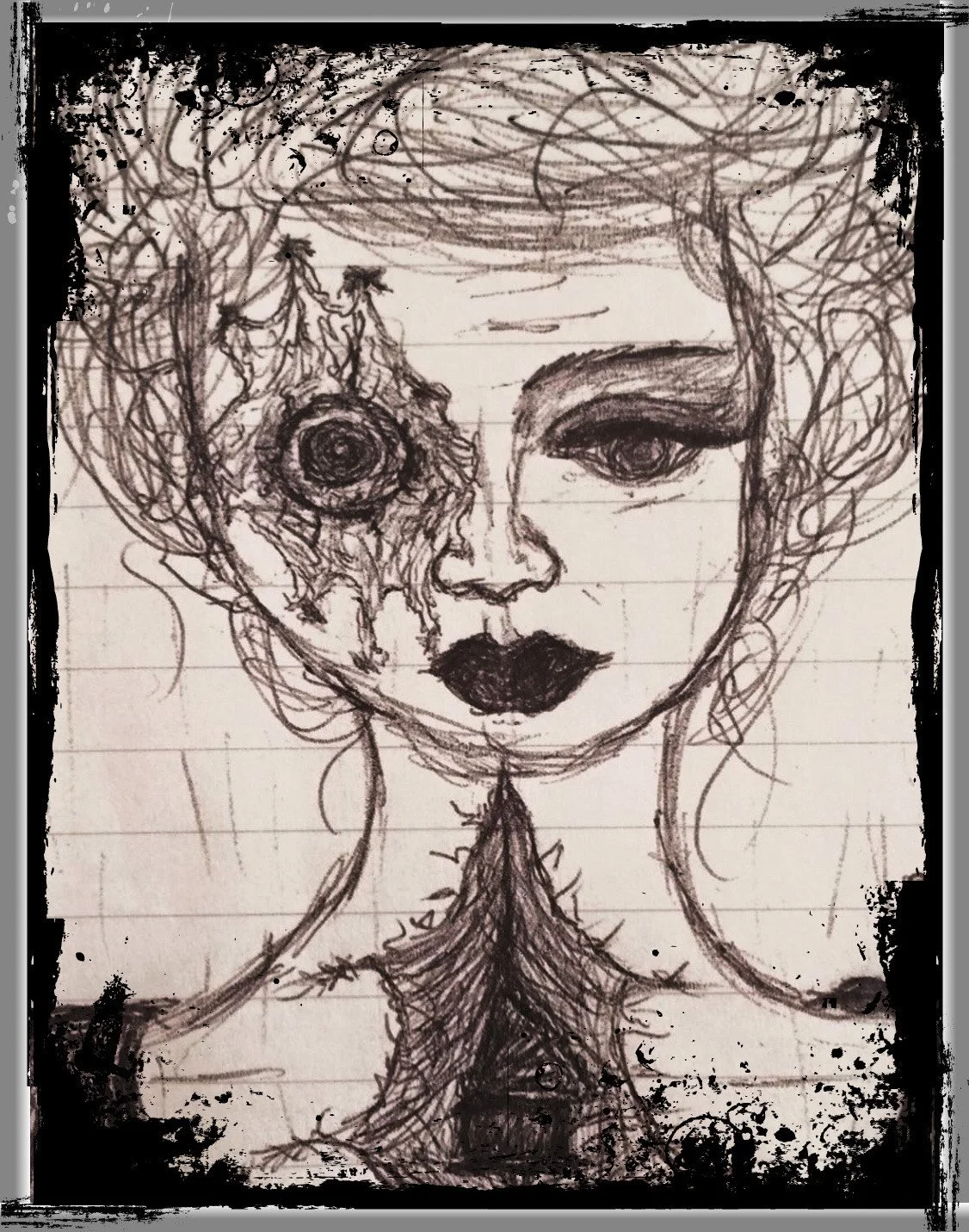
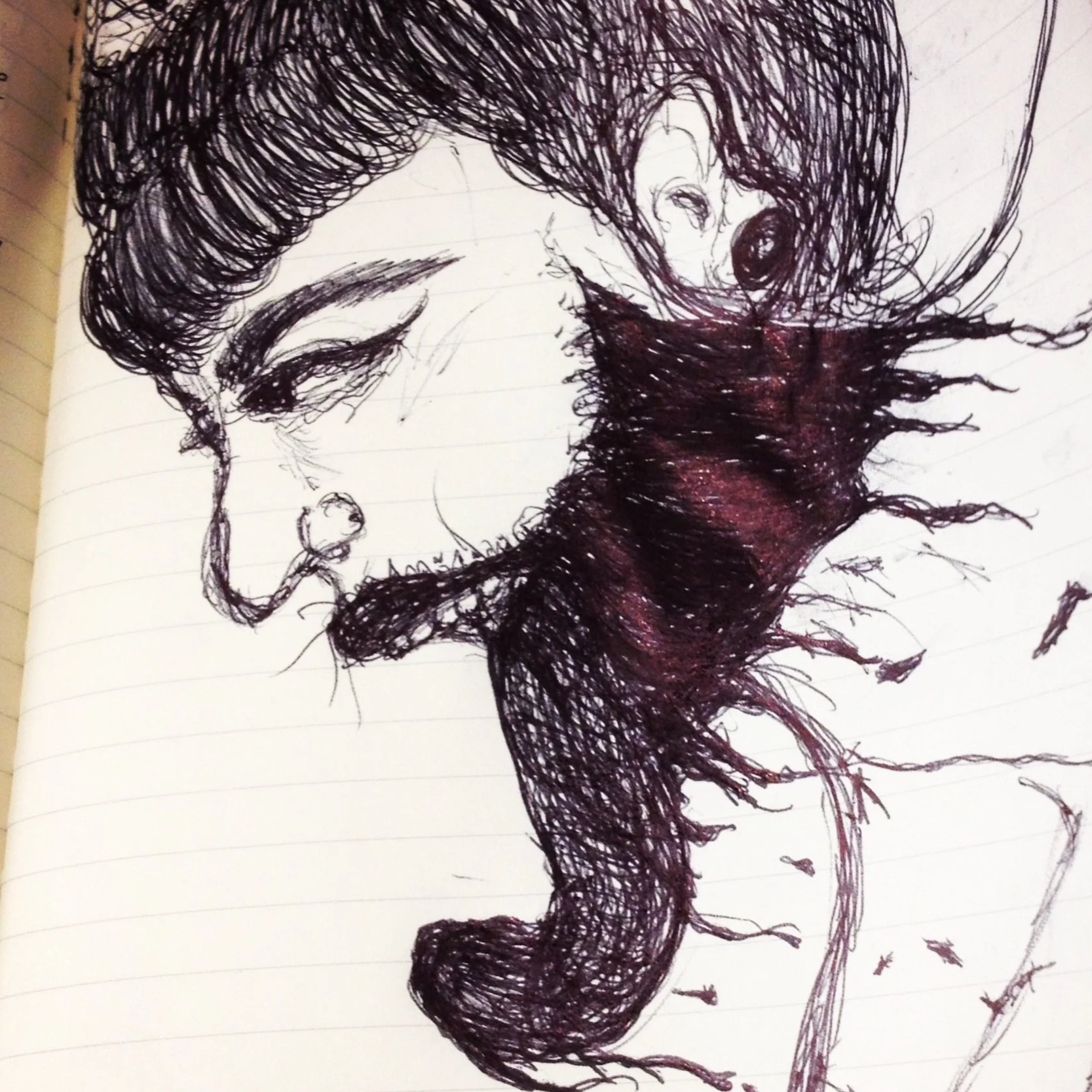
Author’s Note
The Spoils began in 2022, inspired by Massive Attack’s song of the same name.
A lot of my poetry, art, and short fiction is inspired by music. For a long time, I felt insecure about naming the songs behind the work because I worried about what people might think.
Then one day I thought: Who cares?
I love to write. This is my gift. This is what I do.
Fuck what people think.
The original idea was simple: a dead wife watches the person she loves build a life with someone new. When she finally meets his new wife, she realizes she loves her too—not as a replacement, and not only because he loves her, but because something between them feels familiar.
She tells him: Be happy. Let me rest.
As my understanding of my gender and sexuality changed, the story changed with me.
After what I experienced late last year and early this year, I began writing A Way, Part I and A Way, Part II. I later archived them because I could not finish the story.
Only afterward did I realize that A Way had been The Spoils all along—the story I had been trying to write since 2022, but fucking whitewashed.
I had made everyone white. I had stripped away the queerness, the culture, and nearly everything that had once made the story mine.
I was trying to find a way out of the story because I was also trying to find a way out of what was happening inside me.
Returning to The Spoils was not simply a revision.
It was a reclamation.
I gave the characters their histories back. I allowed their love to become Indigenous, diasporic, queer, complicated, and expansive. I stopped forcing it into a shape that made other people more comfortable. Or even me comfortable with what I was dealing with at the moment, or even still. Because in truth I had to sit with why I made A Way white washed and void of queerness, indigeneity, void of all the things that were me, and my becoming, my reconnection, my relationship with myself. I had disconnected with myself with A Way and it had shown.
The Spoils is not the story I originally wrote.
It is the story that survived long enough to return to me.
It was 3:33 in the morning.
Manuela was asleep beside Lance, one arm tucked beneath her pillow, her breathing soft and even. Lance turned his long-haired head toward her and watched for a moment.
He did not want to wake her.
Yasmina was waiting, and he did not have much time.
He slid quietly from the bed. From the drawer beside him, he took the ring he had given Yasmina all those years ago and threaded its chain around his neck—a promise he had made her that someday...
Someday.
Yasmina opened her eyes.
“Not this again.”
It was 3:33 in the morning, and there she was, sprawled across the cold floor of the catacombs where they had first met.
Same place. Same date. Same tiny ritual.
Every year, they were given a few hours to see one another. They talked. They laughed. They touched. They tried to fit twelve months of longing into the narrow space between 3:33 and sunrise.
But this time, something felt different.
Yasmina was tired.
And somehow, before Lance even arrived, she knew that he was tired too.
You see, Lance and Yasmina were soulmates.
The once-in-a-lifetime kind. The kind of love that makes people believe the universe has hidden a promise inside something as small and ridiculous as a plastic ring from a Cracker Jack box.
They met in the catacombs beneath the Basilica of St. Patrick’s Old Cathedral, surrounded by tourists who had come to New York to feel haunted for ninety minutes.
Lance and Yasmina were the only New Yorkers in the group.
Of course they found each other.
It was love that brought them into the same underground room. It was kismet. Or bad luck. Or the kind of cosmic joke that only becomes funny once everyone involved is dead.
Their families came from different diasporas—his from central Mexico, hers from the Catatumbo region of Colombia. Their histories did not match exactly, but the missing pieces did.
Lance’s grandmother still called their family Nahua, although much of the language had been prayed, punished, and shamed out of the generations between them. When she wanted him to listen with more than his ears, she called him by his entire name:
Lance Citlali Ortega Temoxtle.
Ortega was the name the world recognized.
Temoxtle was the part that had survived.
His grandmother gave him fragments instead of lessons: stories about crowded homes, obligations that did not end with one couple, and kinships the Church taught their descendants to hide. She never claimed the old ways were perfect. Only that family had once been allowed more than one shape.
Yasmina’s grandmother carried different fragments. She spoke of their Barí ancestors and of children whose lives could bind more than one father to their care. The details changed depending on who was telling the story, but the lesson did not: belonging created responsibility.
Neither Lance nor Yasmina mistook inherited fragments for instructions. They simply recognized the same stubborn truth inside them—love had always been larger than the rules built to contain it.
So when they spoke to one another, they understood the sentences beneath the sentences.
It felt as though their ancestors could hear them.
“I love you” came easily.
So did passion. So did romance.
So did fighting, misunderstanding, hanging up dramatically, calling back three minutes later, and pretending neither of them had been staring at the phone.
They were very good at loving each other.
They were also very good at being annoying about it.
After three years, three months, and three days, Lance knelt before Yasmina and asked her to marry him.
She said yes before he finished.
Their families lost their minds.
Because what Latin American family would not? What had been scattered by displacement, hatred, poverty, and war appeared to be gathering itself again in one tiny neighborhood in Queens.
There was enough food for three weddings. There were aunties crying before the party began. There were cousins who had not spoken in years standing beside each other because nobody was going to miss the chisme. Someone brought a speaker large enough to communicate with the dead.
Lance and Yasmina danced to “Luna” by Zoé, a song they both loved.
For one perfect moment, she threw her head back laughing.
At least, Lance thought she was laughing. Yasmina sometimes laughed like a cartoon villain, so he smiled and pulled her closer.
Then blood ran from her nose.
Her eyes rolled back.
Her knees buckled.
And then—
And then—
And then there was no sentence large enough to contain what happened next.
They called an ambulance.
There was nothing anyone could do.
A blood clot in Yasmina’s brain made it quick. She barely understood what was happening before she was gone.
Lance, however, understood every second.
Yasmina died.
Something in Lance died with her.
Her funeral was held that Sunday.
When the wake had emptied and only Lance, Yasmina, and Moira remained, Lance asked Moira to marry them.
Moira stared at him.
She had been Yasmina’s woo-woo friend since college, which was how Lance described her spirituality whenever he wanted to irritate them both. Moira read cards, knew prayers her grandmother told her never to repeat over the phone, and had once cleansed Lance’s apartment after he bought a mirror from Craigslist.
“You understand she is dead,” Moira said carefully.
“I understand.”
“You understand this is not legally anything.”
“I don’t care.”
Moira looked at Yasmina’s body, then back at Lance.
“What exactly are you asking me to do?”
“Witness us.”
So she did.
She did not resurrect Yasmina. She did not cast a spell. She simply stood between the living and the dead and witnessed a promise made too late.
A ring went on Yasmina’s finger.
Another went on Lance’s.
At 3:33 in the afternoon, Yasmina Ochoa Ruiz was buried.
At 3:30 the following morning, drunk as a skunk, Lance wandered outside the Basilica of St. Patrick’s Old Cathedral, crying his little eyes out.
At 3:33, Yasmina woke up screaming in the catacombs.
“WHAT THE FUCK? WHAT THE FUCK? NOOOOO—WHAT?”
She sat upright.
She looked alive.
Well. Not exactly.
She felt lighter. Present, but not entirely. When she looked down, there was a ring on her hand.
“When the hell did I get married?”
She pushed herself from the floor and wandered through the tunnels until she found the locked church doors. She wondered whether she could walk through them.
She could.
That was when she realized she was, indeed, very dead.
The knowledge brought with it a profound sadness.
“Am I dreaming?” she asked the homeless man slumped beside the church.
The homeless man was Lance.
“Lance?”
He looked up.
His mouth opened.
He stared at her as though he had seen a—
Well.
Whatever the hell she was.
He scrambled backward, palms scraping the pavement.
“Wh—wh—what—”
“I’m not doing well,” he finally managed.
Yasmina saw the ring on his hand.
She looked at her own.
Then she looked back at him.
“When did we get hitched, Lance?”
“Uhh. I can explain. Moira—”
“MOIRA? The one who does all the brujería shit?”
“Oh, shut up. Stop acting like you don’t do that shi—” Lance stopped.
He stared at the empty space in front of him.
“Wait. Why am I talking to nothing?”
“BECAUSE I AM NOT NOTHING, YOU IDIOT. I AM YOUR WIFE, APPARENTLY.”
Yasmina kicked him in the thigh.
He felt it.
They both froze.
Lance reached for her.
His hand did not pass through her. It closed around her wrist.
“Yazzy?”
“Oh, shit.”
She dropped on top of him, kissing him and crying on the sidewalk.
A man sleeping beneath a coat a few feet away lifted his head.
“Y’all are nasty.”
They laughed so hard they could barely stand.
They walked around the city. They grabbed a slice. They talked over each other. They kissed against buildings, found somewhere private enough to make questionable decisions, and tried not to wonder what any of it meant.
Near sunrise, Lance led her toward the subway.
He swiped his MetroCard.
The first edge of morning touched the station.
Yasmina vanished.
Lance lost his fucking mind.
There was no gentler way to put it.
He was hospitalized. No one could convince him that she had not been real. Eventually, he learned to say less about what happened. People called that improvement.
Almost a year later, Moira returned to New York for the anniversary of Yasmina’s death.
At the memorial, relatives whispered about how Lance had lost it. How he claimed he had seen Yasmina. How he swore he had touched her.
Moira’s eyes widened.
“Oh, shit.”
She found him leaning against a wall.
“So,” she said. “You saw her?”
Lance turned slowly.
“You fucking believe me?”
Moira looked just as shocked as he did.
“Wow,” she said. “You must have loved the shit out of her.”
His face crumpled.
Moira’s eyes filled too.
“Go back tonight,” she said. “Same place. Same time.”
“You knew this would happen?”
“No.”
“Then how do you know she’ll be there?”
“I don’t.” Moira squeezed his arm. “But whatever opened between you did not feel finished.”
That night, Lance returned to the catacombs.
At 3:33, Yasmina opened her eyes.
Like clockwork, he came.
Like clockwork, she returned.
It was kismet.
They met once a year.
The second year, Lance brought her a cupcake crushed inside his coat pocket. Yasmina complained that death had apparently not improved his ability to transport baked goods, then ate the frosting from his thumb.
The third year, they fought because he had changed apartments without telling her. She accused him of erasing the life they had shared. He accused her of expecting him to preserve a museum he could barely survive entering. They spent forty minutes refusing to speak, then watched the sunrise from opposite ends of the same bench.
By the fourth year, they had begun asking each other questions neither could answer.
What did Yasmina do during the months she was gone?
Why did Lance remember some days with perfect cruelty and lose entire weeks of her face?
Were they continuing a marriage, repeating one, or building something neither life nor death had prepared them to name?
They still laughed. They still touched. They still loved each other.
But they were no longer frozen inside the night she died.
Then one morning, Lance arrived late.
Yasmina noticed immediately that the ring was no longer on his finger. He wore it on a chain around his neck.
“Ohhh,” she said, smiling. “You had a date.”
“Don’t be jealous. I didn’t—”
“Wait a minute. Who said I’m jealous?”
“You’re not?”
“I’m happy for you.”
“No, you’re not.”
“Why?”
“Because the old you would have punched me by now.”
Yasmina laughed.
He laughed too, but nervously.
She looked at him with a tenderness he remembered, although something inside it had changed. Death had not erased her. Time had simply continued shaping her in ways neither of them understood.
“It has been a long time, Lance.”
“I know.”
“You deserve to date. Fuck. Love. Live.”
“Not move on,” he said quickly.
“Fine. Don’t move on.” She took his hand. “Move with.”
He looked at her.
“Loving someone else does not mean we love each other less.”
He wanted to believe her.
But somewhere beneath the love, beneath the grief, beneath everything his grandmother had tried to teach him, Lance still believed that one bond had to replace another.
One wife had to be real.
The other had to become a secret.
Two years later, Lance met Manuela Martínez.
She was Guatemalan American, born into a Kaqchikel Maya family, and entirely unimpressed by his habit of turning every minor inconvenience into a Greek tragedy.
Manuela laughed with her whole body. She kept emergency tamales in her freezer, killed every plant except rosemary, and refused to let Lance call avoidance “processing.” She had a life before him, plans that did not include him, and a tenderness that never required her to become small.
They became friends first. Then the kind of friends who called each other for no reason. Then the kind who stopped pretending there was no reason.
Because she understood what it meant for a family to love a language it had nearly lost, Manuela began learning the Nahuatl Lance’s grandmother still carried. She never treated it as hers. She learned it because she loved the parts of him that had survived without his permission.
Lance told her about Yasmina as the woman he had lost.
He told her about the proposal, the funeral, and the ring.
He did not tell her Yasmina still returned.
The longer he waited, the less the silence resembled grief and the more it resembled a lie.
Years later, Yasmina woke earlier than usual.
A beat called to her from beyond the catacombs—a rhythm joyful and settled, as though it had finally found its peace.
She followed it through the city and into a small garden in Brooklyn.
There was a wedding.
She recognized old friends immediately. People she had loved. People who had once stood over her casket and cried.
Then she saw the source of the rhythm.
Lance was dancing with a woman in white.
He was married.
He was at peace.
He had found love again.
A banner hung between two trees:
CONGRATULATIONS, MANUELA AND LANCE.
Yasmina smiled.
“I’m happy to see you again,” Moira said behind her, already crying. “Even if it’s only for a little while.”
Yasmina turned and grinned.
“It’s everything I could have wanted, except it’s in the borough I hate most.”
Moira laughed through her tears.
“I don’t even know her,” Yasmina said, looking back toward the bride, “but there’s something about her.”
Lance dipped Manuela and lifted her into a kiss.
“That was nauseating,” Moira said.
“I know.” Yasmina giggled. “I would have loved it.”
Moira pulled her into a tender embrace.
“Sometimes, when I hug her, something feels like you,” she admitted. “It isn’t you. I know that. But sometimes I wish it were. I miss you.”
Yasmina kissed her cheek.
“You don’t have to miss me so hard. I’m everywhere.”
“I know,” Moira whispered.
As Yasmina began to leave the garden, a hand touched her arm.
She turned.
The bride stood behind her.
For one suspended moment, neither woman spoke.
Manuela’s smile faded—not from fear, but surprise, as though Yasmina’s face had interrupted a thought she had been having for years.
Yasmina felt it too.
Not recognition exactly. She knew they had never met.
But something warm and immediate passed between them. The noise of the wedding seemed to fall away.
“Hi,” Manuela said.
“Hi.”
“I don’t know you.”
Yasmina laughed softly. “That is usually how meeting someone works.”
Manuela laughed too, but she kept looking at her.
“I know. I just—have you ever met someone and felt like you were already in the middle of knowing them?”
Yasmina held her gaze a moment longer than she meant to.
“Yes.”
Music continued behind them. People danced. Glasses clinked. But the air between the two women remained strangely still.
“Are you here with Lance?” Manuela asked.
Yasmina’s expression shifted.
“You could say that.”
“I think I’ve seen you before. In a picture, maybe.” Manuela tilted her head. “Would you like a drink?”
“No, thank you.” Yasmina smiled. “But you look lovely.”
Manuela’s face softened.
“Your eyes,” Yasmina added. “They make me feel like home.”
“Thank you.” Manuela touched the edge of one eyelid without thinking.
Their eyes held.
“Manuela!” Lance called from across the garden.
She turned.
“I’ll be right there!”
When she looked back, Yasmina had already stepped away.
“Wait,” Manuela called.
Yasmina glanced over her shoulder.
“What’s your name?”
Yasmina only smiled.
“Congratulations, Manuela.”
Then she disappeared into the crowd.
Manuela stood there, watching the place where she had been.
She had the strangest feeling that she had just missed something.
Or perhaps found it too early.
It was 3:33 in the morning.
Manuela slept beside Lance.
He watched her breathe, then slipped quietly from the bed.
Yasmina was waiting.
When he reached the catacombs, darkness was already thinning toward morning.
“Hey. Sorry I’m late. I—”
“You got married,” Yasmina said, smiling.
His face dropped.
“How did you— I was going to tell you.”
“Were you?”
“Eventually.”
“Eventually,” she repeated, folding her arms. “Before or after I found out for myself?”
“I didn’t want to hurt you.”
Yasmina stared at him.
Then she laughed.
“Oh, Lance.”
“What?”
“Your girl is lovely.”
He blinked.
“What?”
“Manuela. She is beautiful.”
“Yasmina—”
“And funny, apparently. Excellent taste in music.” Yasmina tilted her head. “Questionable taste in men, but nobody’s perfect.”
“Can you not?”
“What?” she asked innocently. “How could I be jealous? She is perfect. Hell, if I weren’t with yo—”
“Stop.”
The sharpness in his voice cut through her laughter.
Yasmina went quiet.
Lance looked away, jaw tight.
“Don’t make jokes like that.”
“Why?”
“Because you’re my wife.”
“And so is she.”
“It isn’t the same.”
“No,” Yasmina said gently. “It isn’t.”
She stepped closer.
“Look at me.”
He would not.
“Lance.”
Slowly, he lifted his eyes.
“Aren’t you in love with her?”
His expression folded inward.
“Yes.”
“And when you are with her, are you happy?”
He swallowed.
“Yes.”
“Then be happy, my love.”
“I can’t just—”
“Because loving you does not mean wanting you lonely.”
His eyes filled.
Yasmina took his hands.
“You keep saying one of us must stop being your wife for the other one to count.”
“It isn’t the same.”
“No,” she said gently. “It isn’t. She has her life with you. I had mine. She did not steal it, and you did not give it away.”
“But I promised you someday.”
“And you kept your promise for every day we were given.”
“That wasn’t enough.”
“No,” she said softly. “It wasn’t.”
He began to cry.
Yasmina rested her forehead against his.
“I still love you,” he said.
“I know.”
“I love her too.”
“I know that too.”
“How?”
“Because when you say her name, you look alive.”
He broke then, folding into her.
Yasmina held him tightly.
“Be happy,” she whispered into his hair. “I am happy for you.”
“I don’t understand how.”
“There are no jealousies here,” she said. “Only love.”
Then her old grin flickered across her face.
“And perhaps my blessing to keep kissing your beautiful wife.”
A wet, unwilling laugh escaped him.
“There you are,” Yasmina whispered.
The first edge of sunlight reached into the catacombs.
Yasmina removed her wedding ring.
Lance’s smile vanished.
“Lance Citlali Ortega Temoxtle,” she said, using every part of his name the way his grandmother had when she wanted his ancestors to hear. “You and I were together in life for three years, three months, and three days. In death, I held on to you for much longer than I needed to.”
“Yasmina—”
“In love, I will always find you. In this life. In another life. In every timeline where we are lucky enough to meet.”
She placed the ring in his palm and closed his fingers around it.
“You found your peace, baby.”
“No.”
“So let me find mine.”
His face crumpled.
“How will I know you are all right? How will I talk to you? How will I—”
The sunlight moved over her shoulder.
Her body began coming apart inside his arms—not vanishing at once as she had every other year, but loosening slowly into light.
“Oh my God.”
He grabbed her tightly.
“Please don’t go. Don’t leave me. Please.”
“I love you in every timeline,” she whispered into his hair.
The wind and morning took what remained of her, lifting her into the air until Lance was holding nothing but the ring in his closed hand.
Then there was nothing.
The train back to Brooklyn was miserable and lonely.
Yet the closer Lance came to home, the more something hopeful moved through him.
Yasmina deserved peace. He knew that.
Still, she did not feel gone.
Maybe Carl Sagan was right. Maybe they were all star stuff, and Yasmina had simply become part of everything.
Maybe another version of them was still somewhere, living their little love story.
Maybe love did not disappear when its shape changed.
Maybe it remembered.
Years before Lance met Manuela, a semi-truck struck her car.
By morning, she needed a new heart and the corneas that would preserve her sight.
At 3:33, the hospital received word of a match.
The donor was a young woman named only by the surname her family later allowed them to share:
Ochoa.
Manuela carried the name privately.
She never knew the woman’s first name.
When Lance reached home, he removed his shoes and pants and slid quietly into bed.
Manuela turned toward him and put her arms around him.
He held her.
She made a small humming sound as she guided one of his hands to her chest.
Lance froze.
He knew that melody.
His eyes filled before he could stop them.
“Luna,” he whisper-sang, his voice breaking. “No me abandones más...”
The tears came hard then.
Manuela pulled him closer as his body began to shake.
“I told you,” she whispered, stroking his hair. “You’re all good now. Shh. You’re okay.”
But Lance only sobbed harder.
She held him until his breathing slowed. Then she turned fully to face him.
In the Nahuatl she had learned for him, Manuela asked softly, “What was her name?”
Lance stared at her.
“Yasmina.”
Manuela pressed her forehead against his.
“Ochoa,” she whispered.
Her voice broke.
Lance’s eyes widened.
Manuela kissed his hands. She placed them gently over her eyes, kissed them again, and brought them to rest over her heart.
Still speaking in Nahuatl, she said, “Nothing in this world is coincidence. It is memory. It remembered, and it brought us back together.”
She began to cry.
“She said hello.”
They embraced.
“I’m sorry, Manny,” Lance choked out. “I didn’t sa—”
“Not now,” she whispered, tenderness and hurt sharing the same breath. “I love you. But you should have told me. When the time is right, we’ll talk.”
She held him against the heart that had once beaten inside Yasmina, while his hands rested beneath the eyes through which Yasmina had looked at her and felt at home.
No one had been left with the spoils.
At least now, in this love, they were whole.