• Ocasa Ue/ Return To Words
  • About
  • Sign In My Account
Menu

Uba Suna Ghuâ-sa

Botanic Path Of Horror
  • Ocasa Ue/ Return To Words
  • About
  • Sign In My Account

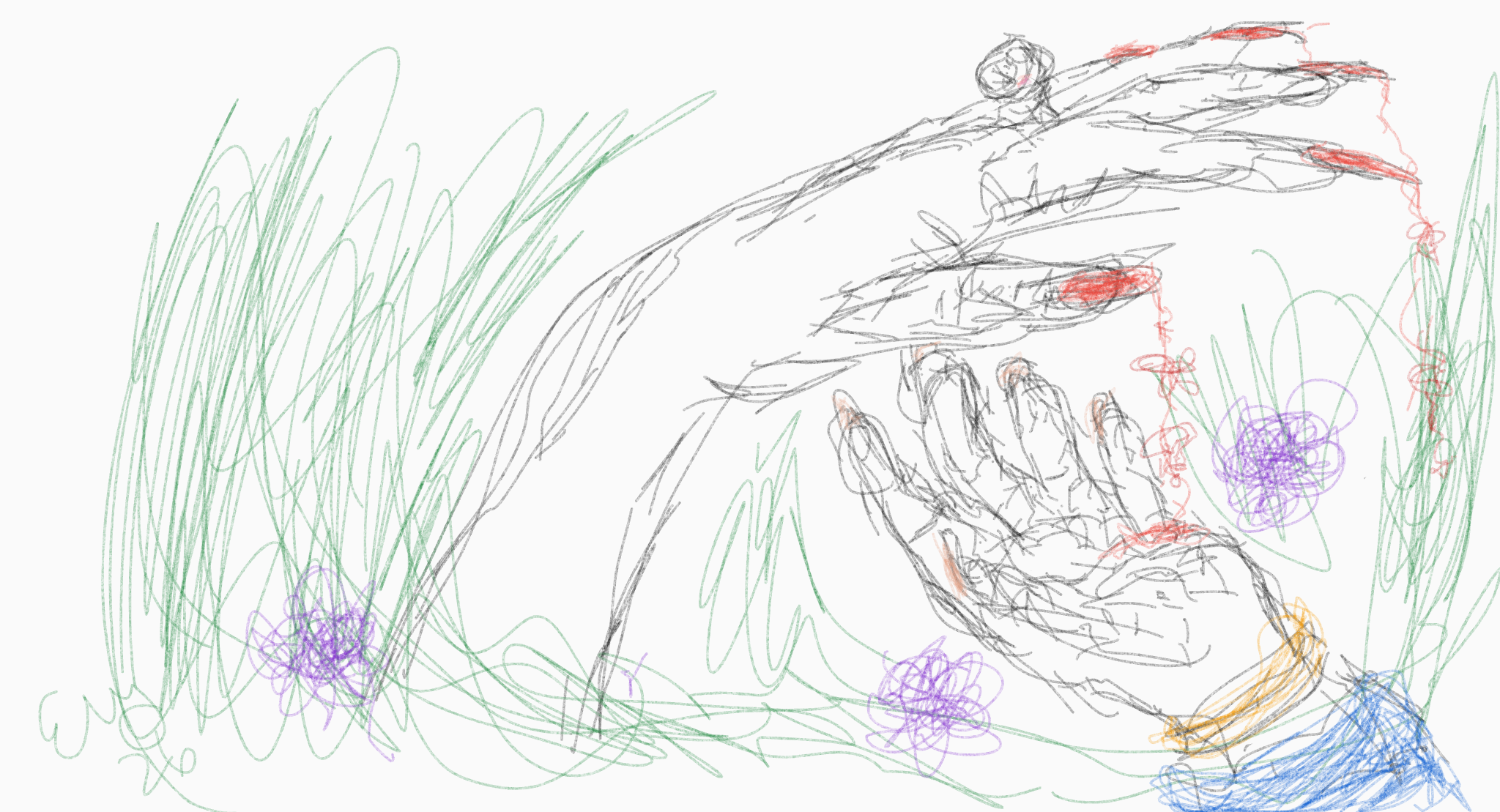
Xulma is engaged— and so is Violeta.- Evy Gonzalez Ronceria, 2026

Violeta and El Silbón (Part Three)

October 29, 2026

By morning, the rumors had already begun.

No one said them directly to Violeta at first. Rumors rarely began as sentences. They began as eyes. As pauses. As women stopping their conversations when Violeta entered a room. As boys laughing too loudly when she passed. As mothers pulling daughters closer in the market.

Then the words came.

Fast girl.

Dirty girl.

Poor thing.

Slut.

The first time Violeta heard it, she did not understand.

She was eleven years old.

She had not kissed anyone. She had not held anyone’s hand except Xulma’s and her mother’s and, once, her father’s, when he was still alive and walking her across a flooded street.

But the word stuck to her anyway.

It found her in classrooms. It waited for her near the creek. It followed her home in the mouths of boys who suddenly wanted to stand too close, who suddenly thought her body was a door someone else had already opened.

Xulma was furious for her.

At least, that was how it looked.

She slapped one boy hard enough to split his lip. She screamed at another until he ran. She walked Violeta home and told her not to listen. She told everyone they were disgusting. She told Violeta she was beautiful and good and that people were cruel because they were bored.

Violeta clung to her.

What else was there to do?

Her father was dead. Her mother was a ghost who still cooked dinner. Her grandmother prayed in a language older than the church and looked at Violeta’s throat with a grief she never explained.

And Xulma was there.

Xulma talked for two people. Fought for two people. Laughed for two people. She stood between Violeta and the world so often that Violeta did not notice, not then, that Xulma was also standing between Violeta and the truth.

Years passed.

The girls grew older.

Their bodies changed, and the rumor changed with them. It learned new words. It crossed new rooms. It survived moves, schools, family arguments, and church gossip.

Then Xulma's family left Colombia.

Without her, Violeta found life more difficult. Suddenly, she had no friends, no voice beside her own, and nothing standing between her and those who sought to harm her.

Or so she believed.

The calls came from the States. Xulma's voice offered reprieve, affection, and an endless procession of I miss yous. Her mother made promises to Violeta's mother, too. One day, they would find a way to get them out of that town, away from the people who had been so cruel to their poor baby girl.

And with many prayers, candles to la Virgencita, and plegarias, their pleas were finally heard.

By the time Violeta's family left Colombia for Chicago, she believed distance might finally kill the rumors.

Distance killed nothing.

The rumors seemed to grow wings, learning which Avianca flight they had boarded, following her sweet light into that colder land with their many dark eyes.

In America, the rumor learned English.

It sounded different, but it had the same teeth.

Easy.

Crazy.

Damaged.

Dramatic.

Violeta, however, arrived differently prepared.

She learned to laugh before other people could. She learned to leave parties early. Her mystery made her interesting, intriguing even. She learned to watch men's hands. She learned that when someone called her intense, what they often meant was wounded in a way that made them uncomfortable.

Xulma stayed close.

But this time, Violeta stayed closer to herself.

Thank God for Xulma, people said.

Thank God Violeta has someone like her.

And Violeta believed that too.

That hadn't changed.

But she could tell Xulma was growing weary of being her savior.

Or at least, that was what Xulma wanted everyone to believe.

One afternoon, surrounded by their friends at the lunch table, Xulma made one of her little comments.

"I don't see why she can't just defend herself sometimes."

She spoke about Violeta as though Violeta weren't sitting right beside her.

"No one asked you to save me," Violeta said quietly, picking at her pudding.

Xulma turned her eyes toward Violeta.

Slowly.

Then the rest of her head followed.

The air around the table seemed to quiet, despite the noise of the cafeteria.

"What did you—"

"Yeah. I don't ask you to defend me," Violeta continued. "I love you, but it's not something I ask of you. You do it, and I'm grateful. I don't know what you're expecting from me. And, by the way, I do defend myself."

She smiled gently at her friend.

"You just talk more than me."

Xulma's eyes grew wild.

Dark.

For a moment, Violeta saw something in her she had never noticed before.

An emptiness.

Something that could swallow a person whole, and yet seemed filled with something else entirely.

Then Xulma smiled.

She hugged Violeta and laughed.

"Me prometiste," she whispered.

Violeta went still.

After school, Violeta reached for Xulma's hand.

Xulma immediately pulled away.

"I'm not into that ga—"

"No hagas el ridículo, Xulma. You know damn well what I was talking about. You defending me. I never ask you to, but you do, and I'm always grateful. I love you. You're my sist—"

"You said saved, marica!"

Xulma stopped walking.

"You know what that means! You did not ask then? Are you not grateful, Violeta?"

Violeta stared at her.

There it was again.

That spite.

That peculiar darkness in Xulma's eyes, as if Violeta had committed some terrible offense simply by existing outside the place Xulma had made for her.

"No, Xulma. Why would you say something like that? I'm grateful for you. For what you did. For everything you do, every day."

"Well, then."

Xulma wiped her face.

Her expression changed so quickly it startled Violeta.

"Todo bien. Forgiven."

She smiled and took Violeta's hand.

Held it for a moment.

Then let go.

They continued walking as if nothing had happened.

At least, Xulma did.

Violeta felt something had changed between them.

She had never asked to be forgiven.

Without Xulma, though, high school would have been abysmal. Violeta knew it. Without her hermana del alma, she would have struggled to make friends, fought through more than she could manage with her wit alone, and walked home through streets that felt too wide, too loud, too full of strangers.

Xulma found her friends.

Xulma found her parties.

Xulma found her clothes that made her look less sad, less foreign, less like a girl waiting for a sound in the trees.

Later, as they grew older, they attended colleges not too far from one another.

Eventually, Xulma helped Violeta find an apartment.

"It's perfect," she said. "Ingrid is a little avoidant, but funny. Lina is sweet. You'll like them."

"I don't know," Violeta said.

"You need to live with people who aren't our moms."

"I live with people."

"You hide near people. That's not the same."

Xulma was good at saying things that sounded true enough to obey.

So Violeta moved in.

The apartment was on the second floor of an old house with thin walls, a narrow kitchen, and radiators that screamed at night like something trapped inside them.

Ingrid lived in the room closest to the stairs and treated affection like an allergy.

Lina kept plants in every window and apologized to furniture when she bumped into it.

Violeta took the smallest room because it had a fire escape and a view of the street.

For a while, it worked.

They paid rent. They bought groceries. They learned each other's bad habits.

Ingrid left mugs everywhere.

Lina cried during commercials.

Violeta forgot the laundry in the washer.

Xulma eventually moved out with her longtime boyfriend, a man she had met during college who, apparently, came from a region near where they had grown up in Colombia.

It struck Violeta as strange, somehow.

But Xulma only smiled.

"When the heart knows, it just knows."

She still came over almost every day, bringing wine, gossip, makeup, opinions about partners who never lasted long, and stories that made everyone laugh until they forgave her for taking up too much room.

Every year, they went camping.

It had started as Xulma's idea, of course.

"Women in nature," she said the first time, lifting a plastic cup of boxed wine like a toast. "Healing. Trees. No men. Maybe mushrooms if Ingrid stops being a cop."

"I'm not a cop," Ingrid said. "I just don't want to die in the woods because you saw a TikTok."

"Coward."

"Correct."

They went anyway.

Then they went again.

After a while, the trip became ritual.

Every year, the same mountains. The same rented cabin near the same trail. The same bad jokes, cheap food, too many blankets, too much wine, someone always forgetting a flashlight, someone always pretending not to be afraid of the dark.

Violeta never loved the woods.

Not really.

But she loved Lina's morning coffee.

She loved Ingrid complaining while secretly enjoying herself.

She loved the way Xulma became bright by firelight, all gold skin and dark hair and stories pouring from her mouth like she had swallowed the sun.

Then, one year, Xulma brought Berto.

The girls already knew him well. He had been Xulma's boyfriend for years, after all.

Everyone except Violeta, that is.

Which was strange, considering Violeta was supposedly Xulma's closest friend.

She knew Berto only in passing. A quick hello. A short conversation. Occasionally seeing him walk through the apartment.

The other girls had spent time with him.

Violeta never had.

Xulma had introduced him to everyone at a birthday dinner in Queens, sweetly announcing that he was from los Llanos.

Everyone had oohed and aahed.

But it was on that camping trip that Berto finally approached Violeta for a proper introduction.

He smiled.

"¿Qué hubo? Tú debes ser la hermanita, ¿no?"

He was handsome in a warm, easy way.

The kind of handsome that made people trust themselves around him.

He had a steady voice, good manners, and the careful confidence of a man who had learned exactly how long to hold eye contact before it became a threat.

Everyone liked him.

Lina liked him immediately.

Ingrid said, "He seems normal," which from Ingrid was basically a blessing.

Even Violeta wanted to like him.

He brought flowers. He remembered people's allergies. He helped carry groceries without making a show of it. He called Xulma reina in a way that made her roll her eyes and smile at the same time.

He asked Violeta questions about Colombia, but never too many.

He knew how to be gentle with a room.

Still, the first time he touched Violeta's shoulder while moving past her in the kitchen, her whole body went cold.

"Sorry," he said.

"It's fine."

It was not fine.

She could not explain it.

He had done nothing wrong.

Nothing she could name.

Nothing she could take to Xulma without sounding exactly like the kind of woman Xulma had spent years teaching her not to be.

Too sensitive.

Too intense.

Too haunted.

So Violeta gave him a chance.

Then another.

Then another.

She watched him love Xulma beautifully.

Or what looked like beautifully.

He listened when she spoke. He brought her coffee the way she liked it. He held her hand in public. He made plans.

He stayed.

Xulma changed with him.

She softened.

Or performed softness so well that no one could tell the difference.

When she announced the engagement, she did it in the apartment kitchen with champagne no one had asked for and a grin she could not contain.

"I'm getting married," she said.

Lina screamed first.

Ingrid said, "Absolutely not," then hugged her so tightly Xulma laughed into her shoulder.

Violeta stood frozen for half a second too long before joy remembered what shape to make of her face.

Then she hugged Xulma.

Hard.

"I'm happy for you," Violeta said.

And she meant it.

That was the worst part.

She meant it with her whole tired heart. Whatever else had lived between them, whatever old roots wrapped around their friendship, Violeta wanted Xulma loved.

Properly.

Safely.

Without a man making a meal out of her shine.

"Careful," Xulma said, laughing. "You'll break me before the wedding."

"Let me see it," Ingrid said.

Xulma blinked.

"See what?"

"The ring, dumbass."

"Oh." Xulma smiled. "You're going to fucking love it."

Lina lowered her glass.

"Oh?"

"There was something I always thought was so beautiful," Xulma said. "Something I wanted for so long but could never have. One of a kind."

She turned toward Berto, her expression melting into something almost tender.

"And Berto told me he'd move mountains to reach the sky if that's what it took to get it for me."

"That sounds like Berto," Lina said.

"It does, doesn't it?" Xulma replied, pleased despite herself. "He wanted to give me something meaningful."

Violeta felt the first turn of sickness low in her stomach.

Xulma extended her left hand.

Then, with an almost theatrical delicacy, she raised it and stretched out her ring finger.

White gold.

Delicate.

Almost too fine to see.

And there it was.

A pearl moon.

Small and curved, with craters worked naturally into its surface, iridescent when the kitchen light touched it right.

For a moment, Violeta forgot how to breathe.

The room continued around her.

Ingrid said something sharp and affectionate.

Lina leaned closer.

Someone touched Xulma's shoulder.

Berto stood near the kitchen island, smiling with his hands in his pockets.

But Violeta was no longer in the apartment.

She was in the dirt.

Leaves stuck to her cheek.

A hand over her mouth.

A chain breaking at her throat.

"Vi?"

Xulma was looking at her.

Everyone was.

"You okay?" Ingrid asked.

Violeta blinked.

The pearl sat perfectly in its setting.

It couldn't have been—

"It looks familiar," Violeta said.

Xulma's smile changed.

Not enough for anyone else to see.

But Violeta saw it.

"Does it?" Xulma asked.

"Can I?"

Violeta held out her hand.

For a second, Xulma did not move.

Then she leaned forward.

"Why, of course."

She placed her hand gently into Violeta's, sliding her fingers across Violeta's palm, one by one, until the ring rested there between them.

She held her hand rigidly, like a mannequin displaying something precious. Her chin lifted slightly, her wrist turned just enough to catch the light.

Displayed.

Protected.

Possessed.

Only then did she let the full weight of her hand rest against Violeta's warm palm.

Xulma's skin was clammy.

Violeta's fingers began to shake.

Up close, the pearl was not as perfect as she remembered. There was a small chip along the lower curve, almost hidden by the silvery-gold setting.

Violeta gently turned Xulma's hand.

Then suddenly released it.

"Vio—"

"Shhhto," Violeta said involuntarily.

There, inside one of the tiny hollows of the moon, was a pink dot no larger than the head of a pin.

Nail polish.
In feminine horror, friendship, generational trauma, latin folklore, legends, manipulation, sexual abuse Tags horror, folklore, colombian gothic, modern Colombian folklore, diaspora
Comment
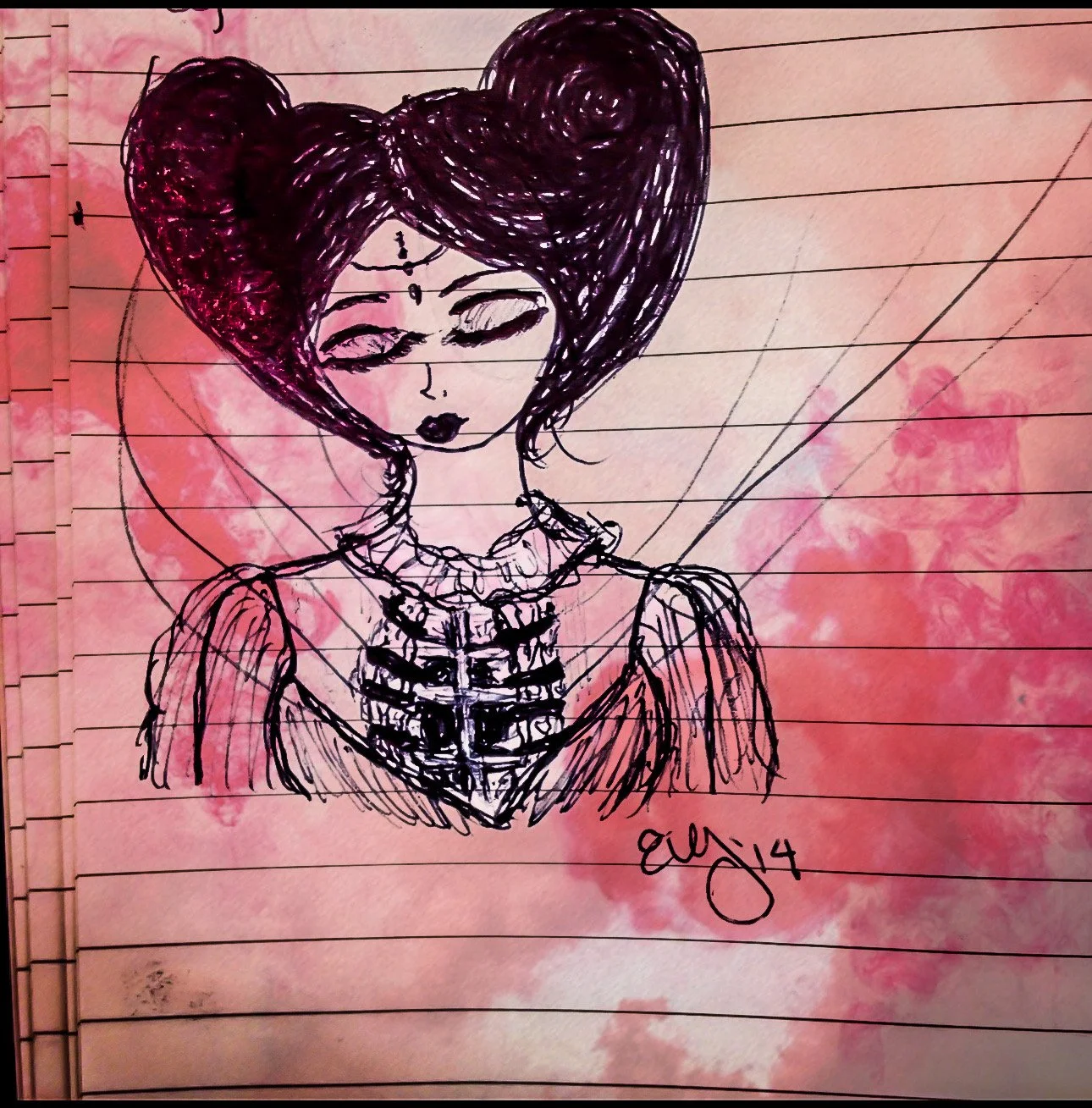
Tocar El Fondo- Evy Gonzalez Ronceria, 2014

Tocar El Fondo Del Recuerdo- Evy Gonzalez Ronceria, 2014

Not Quite Out of The Thicket.

May 29, 2026

Trigger warning/content note: sexual assault, manipulation, trauma, suicidal ideation, and healing.

Author’s note: This essay comes from a long process of piecing together what my body remembered before I could actually accept and name it. I did not do that alone. I have done it with therapy, family, chosen family, close friends, and time.

I am still in the process of healing. The reason I am sharing this is for the little girl in me who was never able to say anything, and for the thirty-year-old woman who was not able to report it in time. And if this resonates with you, then maybe it’s for you as well.

I know what I can and cannot do with this legally.

But here, at least, I can say it in the present.

Here, at least, I will not be silenced.

L took away the broom, and suddenly it seemed like I could no longer keep anything clean.

Not the floor.

Not the house.

Not the story I had been telling myself.

Everything got so dirty. All my intentions, all the things I had been setting, started falling in on themselves. All the good intentions I had for this place we all lived in. I had been trying to make the house feel better. Safer. More peaceful. More alive. I wanted the energy to change. I wanted everyone to get along. I wanted what had been broken to become something gentler.

“So I’ll get another broom,” I told myself.

But every broom I looked at was wrong.

It had to be that broom.

I didn’t understand why. Not then. I just knew that none of the others fit. None of them had the same bristles. None of them belonged to the house in the same way. None of them held the same intention.

But the truth is, the broom was never the point.

The broom only showed me what I had been trying not to know.

A few months ago, I decided to face the man I had been afraid to name clearly. I thought of it as part of my healing. Some kind of exposure therapy. A way to be respectful. A way to be neighborly. A way to stop letting fear rule the house.

Not because he deserved my softness.

Because I wanted peace.

Because I knew the harm he caused did not come from me. It came from whatever sickness, wound, entitlement, and rot lived in him. I didn’t want or need an apology. I wanted him to sit with himself and learn from himself, the way I was trying to sit with myself and learn from me.

I thought it was going well.

Everything seemed to be coming together.

I had been manifesting good things. I had shaved all my hair off to start fresh. I had told myself I didn’t want any part of him that had touched me. I scrubbed my skin raw in the shower. I got new tattoos. I bought wigs. I dyed my hair. I made cleaning schedules. I started taking care of myself, then the house, then the outside of the house.

I started bringing the healing outward.

I asked if I could plant flowers in the front yard. With permission from the landlord, my brother and I bought beautiful plants, and I began planting them during the weekend. I wanted the house to flourish. I wanted everyone in it to feel something good. Even if I eventually left, I wanted to leave the place better than I found it.

That was the version of me still trying to turn pain into usefulness.

That was the version of me still believing I could cleanse a whole house while lying to myself inside it.

When I saw his car pass, my mind started racing. Should I rush? Should I leave? Should I finish the work the way I normally would — the way I was taught: with good intention, with time, and by letting it flow?

So I stayed.

Eventually, he came out and greeted me.

He had the gall to hug me.

“You know we have our tiffs and all,” he said.

My face twisted.

“Tiffs? Okay.”

I laughed it off because sometimes laughter is the last little bridge between what your body knows and what your mouth is not ready to say.

I invited him to garden with me. I mentioned that I had invited L too, but he had not responded. I said it casually, but I understand now that I have always known how to mention a man when I feel unsafe. Since I was a child, saying a man’s name felt like protection. Like proof that someone else existed near me. Like maybe proximity could make me safer.

But with this man, proximity never protected me.

It only confused me.

He made small comments. Dismissive comments. Comments that sounded casual unless you knew where to look. I know where to look now. I know the difference between a joke and a blade passed gently under the table.

Something that day told me: face him.

Something told me: break the mold.

Not because I should have been alone with him. Not because it was safe. But because some part of me was still trying to understand him. Some part of me wanted everyone here to get along. And that hope did not come from nowhere.

He had mentioned camping.

He had talked about going upstate, about getting away for a weekend, about all of us somehow being in the same place without the sickness underneath it. I could see it like the final frame of a movie: L, my brothers, me, the families, everyone healed, everyone camping, everyone laughing, everyone turning the house into a home.

That was the fantasy he helped place in the room.

The healed version.

The lie I wanted to believe because the truth was too ugly to hold yet.

Before we went to the park, he told me to come inside the apartment. I had not been there in months. I had not even gone in when I came down to thank L for something small that had not felt small to me at all.

I came to thank L for helping me get to work on time, but it turned into thanking him for something much bigger: for helping pull me back to myself. He came to my apartment once when I had been lost for a minute, just chilled for a bit, talking to my brother and me, and that simple act brought me back in a way he probably does not understand. He came in. He gave a damn in his own little way.

And because I had love in me, because I had hope in me, because I had confused endurance with healing more than once in my life, I thought: if I can step into this space and not be sick, maybe I can reclaim something. Maybe I can watch a movie here one day. Maybe I can eat dinner. Maybe I can sit near someone I love without the past choking me.

So I walked in.

I endured.

I felt sick.

I felt scared.

And I held the pressure.

I watched him roll weed, then went upstairs to get ready. I told my brother who I was going out with, just in case, because some part of me knew I was preparing for a battle I was not ready for.

I thought I was walking into clarity.

And I was.

Just not the kind I expected.

We went to the park. He said he liked driving there because no one could see him walking due to workers’ comp. He said he wanted to be somewhere more secluded. He did not tell me to bring a blanket. He brought one seat.

I saw the red flags.

I stayed anyway.

I had my keys. I had my phone. I knew the park well. And that day, I told myself I was not there to talk as much as I was there to listen.

He lit a strain called “Speedy Gonzalez,” and I laughed because of course. Almost kismet. He started talking while watching the volleyball players. He talked about the game, about his life, about how this was his “last summer” because he was leaving in four months.

There it was.

He was leaving.

He was always leaving.

When we first slept together, he said he was leaving. Every time after that, that was the line. He was always going back to Puerto Rico. He was always almost gone. He was always temporary when it was convenient and present when he wanted access.

I clocked the time.

He had told my brother and me in December. Maybe next year. He wasn’t sure. Now, suddenly, it was definitely September.

Something in me was listening differently.

Something in me was finally taking notes.

At one point, I said something I thought was true, but now understand as part of the story I had built to survive him.

“You know I love you, right?”

He looked at me, shaken.

But even that sentence needs context. I had told him before, in Spanish, “Te quiero, como amigo. Te quiero mucho.” I had always meant it that way. As love. As friendship. As love poured into someone I believed was my close friend.

So when I said “te amo,” part of me knew it would throw him off. It was meant to. He was always berating me, saying, “Estás enamorada de mí,” and I knew the phrase would hit his ego somewhere, but also jolt him. Maybe, I thought, it would keep him at bay. But I still meant it from the same place. I meant: I care about you. I have loved you as a friend. You have mattered to me.

But there were also two undeniable truths.

“To be in love, there have to be two people,” I told him, “and you and I are not in love.”

It was something I had always said to him, which I thought would be a clue that I meant it the same way. Between him and me, there were never two people who were in love. There was one person who cared, one person who tried, one person who learned to trust and poured love into a friendship — me. And there was one person who mocked it, insulted it, berated it, and made it something ugly — him.

The other truth was this:

He hurt me devastatingly by telling me the only reason he started being friends with me was for sex. Which means the friendship was just a con. All of a sudden, the way he treated me throughout the years, and particularly after we had sex, made sense.

I mentioned L only to explain the difference. What I felt there was recognition — media naranja — a love that felt whole, whether or not it ever became anything, and I respected it. What I felt with this man was aferrado: clinging, sick passion, attached but not clean.

Maybe that is why every time L came up, the little cuts started.

I had always known how I felt. It could never be more. I gave my trust, my care, my loyalty to a friendship with him. Or so I thought.

The sex was something I had allowed out of trust. Only later was I able to understand those years of trust were years of manipulation.

When he started to explain why it would never work between us, I realized immediately that this outing would be taking an unexpected detour.

I let him reveal himself.

Boy, I wish I hadn’t.

He went on about why he could not love me. Why we were different. Dress styles. Movie styles. Religions. Taste. All of it laid out as if he had ever really tried to know me.

He had not.

We had never gone to see one movie together. I invited him out — to coffee, to walks, to ordinary things friends do when they are trying to know each other better — and he never had the time. I had tried to talk to him about politics, and he low-key told me it was not for women to talk about. I had tried to show him what I liked, and he barely tried to get into it. Even as a friend, he did not try.

And something in me cracked open.

Not because I wanted him.

Because I finally heard him.

And I was free of that sick, clingy poison.

He was telling me, in all his careful little ways, that he had treated me as less than because he saw me as less than. He could soften it. He could dress it up. He could lie through his teeth and say otherwise. But when you do not listen to someone, when you do not give them effort, when you touch their life without honoring their personhood, you have already said what you believe.

The truth is, I am plenty fucking amazing.

The truth is, I am worth everything.

And I am tired of translating someone else’s cruelty into a language that hurts me less.

He talked about L too. Every time L came up, there were comments. Little cuts. He would tell me L did not go out. L did not see people. L would not respond to me anymore. Years before, he had told me similar things. He told me L did not want to see me. He told me not to bother him. He told me L thought I was crazy. He made himself the translator between me and someone I cared about.

I trusted the wrong interpreter.

I trusted him because he stood close to people I loved.

That is one of the hardest truths to hold. I mistook proximity for safety. I thought because he was close to L, close to L’s father, close to the house, close to the story, that he could be trusted with parts of me.

But access is not safety.

Familiarity is not safety.

A man standing near someone you love is still capable of harming you.

For a moment, I thought about calling him a monster throughout this essay because I needed a word big enough for what my body knew before my mouth could say it.

But maybe that gave him too much credit.

He was not a creature from a story. He was not some ancient evil. He was not special.

He was a man.

A man I trusted.

A man who knew how to sound wounded while making me unsafe.

A man who used language, sympathy, trauma, and access to make me doubt myself.

A man who stood close enough to love that I confused him for protection.

And maybe that is the part I have to stop dressing up.

Not because he deserves softness.

Because I deserve clarity.

And that is where it should have ended.

Where it should have ended.

But it didn’t. I was unwell. And I was stuck. Compromised.

And this was right where he wanted me.

Because he wasn’t going to give up unless he tried.

At the park, he told me about his childhood. His heartbreaks. His embarrassments. His traumas. He told me things I know are hard to tell. I know what it means for the body to carry stories it can barely survive speaking.

And still, something in me grew angry.

Not because I had no compassion.

Because I could see where he wanted the story to go.

He let go of my hand because he saw it in my eyes.

I wasn’t buying it.

Still, the child in me wanted to reassure him. I was high. I did not feel well. I was not sure about anything except the old instinct to comfort pain when I saw it. So I leaned in and hugged him. I kissed his forehead.

And then my body remembered something before my mind did.

I moved away quickly.

He laughed and said something sexual. Something vile. Something that turned my compassion into a target.

Who does that?

After saying what he had said?

Who takes a moment of tenderness and makes it unsafe?

I had already told him I was not feeling well while smoking. He knew I was impaired. He knew. And still, he pushed. Still, he watched. Still, he seemed disappointed the outing was not becoming whatever he had imagined it would become.

Near the end of the outing, I kept saying how much clarity I had. I said it was one of the best days of my life because I finally understood him. I went there to sit with my “monster” face to face and say, in my own way, “I see that you are damaged, and I hope one day you sit with yourself, apologize to yourself, and heal.”

Technically, that was the first thing I said right after that “te amo,” and that is where that outing should have ended.

But it didn’t.

It was never going to.

Because he was trying to get something completely different, and he wasn’t getting it. Nothing he was trying was working.

So he tried one more thing.

“One more thing. You remember that night?”

I did not want to repeat it again.

“Yes. What?”

“When you told me you wanted to suck my dick.”

I recoiled.

I started to say what I remembered. That he forced my head to his face. That he forced my hand down his pants.

He interrupted.

He tried to redirect the memory back into something he could live with.

He said I had made it sound like I was only there to talk, not for sex. Like he had violated me or something.

And there it was.

I wasn’t out of the thicket yet. Not entirely.

My body knew before I did.

I went there to talk.

I had not gone there for sex.

I had felt forced from the moment he forced my head to kiss him. From the moment he forced my hand down his pants. I didn’t want to have sex; that’s why I asked if he wanted head. This was not kink. This was not play. There was no permission being asked for and freely given.

There was pressure.

And he knew that.

He knew my history. He knew what I had survived. He knew the places in me that had already been hurt.

And still, he pushed.

I felt forced to keep going. Forced to get on top of him because he wouldn’t cum, because it would not end, because my brain had already gone into that place where the only instruction left was: just get it over with.

“It was what you said.”

My body was yelling at me.

I had softened the truth for him because I had been softening it for myself.

I did not forget.

I refused to call it what it was.

I refused because calling it what it was meant remembering the promise I had made myself: to never let any man touch me like that again.

Because I had made a terrifying promise to myself if a man ever did.

And a man did.

When that truth landed, I needed everyone with me. I couldn’t be alone. I was actually very scared to be by myself. I hated what my brain was doing. I love, however, how my family, therapists, friends, and ancestors/spirit came through. This honestly hasn’t been easy to get through, and with their help, I have been getting through it.

I kept talking down to myself, saying, “I swore I was smart. I swore I was intelligent. I went through this before. Why didn’t I know?” No measure of intelligence, no measure of trauma, could have prepared me for this. My therapists have reassured me that this could have happened to anyone and that this wasn’t my fault. And I have reassured myself of that same fact every day since I have settled with the truth.

People sometimes don’t understand that the body remembers before the story is ready. Sometimes you do not forget the facts. You forget the name. You remember what happened. You remember what was said. You remember the room, the feeling, the sickness, the way your brain said: just get it over with.

But you do not call it what it is.

Not yet.

Because naming it would tear down the whole structure you built to survive around it.

And I had built a structure.

I called it friendship.

I called it care.

I called it love.

I called it healing.

I called it facing my fear.

I called it wanting everyone to get along.

But the truth was simpler and more painful.

I was manipulated by him.

I was raped by him.

It happened.

It is fucking shitty and fucked up and terrible, and it sucks, and that’s putting it so fucking lightly.

And I have to sit with that truth without shaming myself for it.

I loved him. I thought he was my friend.

And now I know I had been convincing myself and everyone I know that I still loved him, and everyone looked at me like something was a tad broken in me, and it turns out, yeah — they were right. He was even more vile than I could admit, and the reality was more than I could handle.

I hated him. I hated myself. I had been dressing that hatred as love because love was the language I knew best. I love genuinely. I love deeply. I pour care into people. I make meaning. I try to understand where pain comes from.

But understanding someone is not the same as excusing them.

Compassion is not consent.

Pain does not make a person safe.

Trauma does not make a person harmless.

And my love was never supposed to be the place where someone else hid their violence.

The day after the park, he checked in. I told him I had onion bulbs for him and to come upstairs. When he did, he stopped on the steps.

“Why only here? Come up to the garden,” I said.

He said there were too many people upstairs.

“It’s my brother,” I told him.

He said it was better when it was just us.

Then I saw him grab himself.

And my brain started screaming.

This was not a misunderstanding.

This was not friendship.

This was not healing.

This was sickness.

He had done something similar before. On New Year’s, I had invited him and L upstairs. He told me L had gone to his room as soon as he heard me knock. He told me he would rather it be just us.

It all got louder.

The pattern started making a sound.

Then came the broom.

L needed it, or said he needed it, for the backyard. I was still trying to finish the front. When he saw me, he retreated. I could feel him looking for distance, and my old fear rose up.

“If you don’t like me, if you don’t want to be around me, just say it.”

There it was again.

The fear of being hated.

The fear of asking and hearing the answer I had been trained to expect.

He reassured me in his own way that he just needed the broom. But when I came back, the broom and dustpan were gone.

And I panicked.

I was angry.

I was lost.

I needed that broom.

Or I thought I did.

But the panic was not about the broom.

It was about the spell breaking.

I had been trying to clean the house with intentions that were not true. I had been trying to fix a problem I could not fix. I had been trying to create harmony in a place where my own body was still telling the truth and I was still asking it to wait.

The broom mattered because it belonged to the house.

But I do not belong to a house more than I belong to myself.

The intentions were not working because I was not setting them for myself.

I was setting them for peace.

For everyone.

For the house.

For the fantasy.

For the photo finish.

For the version where everyone heals because I stayed soft enough.

But I was not setting them from the truth.

The truth is that the loops only stop when I recognize what happened, name it, and stop shaming and hating myself for surviving it.

The truth is that I have to stop silencing myself for men.

Stop writing it only in poetry for the world or my soul to decipher.

Say it simply.

Say it painfully, so I understand.

I was manipulated.

I was raped.

It happened.

I cannot control whether he ever looks at himself and recognizes the harm he has done. I don’t know if I’m the only one he’s done something like this to. I can’t control whether anyone believes me. I can’t control what people do with the truth once it leaves my mouth.

But I can stop abandoning myself in advance.

I can stop making him larger than he is.

He is not a “monster.”

He is a man who harmed me.

And I am a woman who remembers.

A woman who has hated herself for having put herself through this generational bullshit for so damn long.

A woman who is learning to forgive herself for it.

So for that, thank you.

And I also have to be honest: L hurt me too.

Not in the same way. Not in the same place. But he hurt me.

And as much as I love him, as much as I want to give him grace, I cannot use grace to silence myself. I cannot make my love for him another place where I disappear.

I can thank him for the small things that helped me come back to myself. I can love him. I can wish him healing.

But I can also tell the truth: his absence hurt me. His distance hurt me. His silence hurt me.

And I am no longer willing to call that nothing just because I understand where it may have come from.

In Muisca belief, we are all reflections of one another. So if I saw myself reflected in you, L — in your wounds, in your distance, in your light, in whatever part of you I recognized before I had language for it — then maybe you are in for one beautiful ride in this lifetime.

The journey is great, king.

Messy, but beautiful.

Please take it.

With so much love and gratitude.

I have entered a kind of peace in knowing now.

Something I didn’t get when I was younger.

Or a decade ago.

I know it now, through myself in the present.

Through my body.

Through my mind.

Through the part of me that finally understood my love was real, but my endurance was not proof of it.

Through the part of me that finally let the story become plain.

A garden was never going to make the house a home.

The broom was never going to heal the house.

But losing it helped me stop lying to myself.

And that is where everything started looking much cleaner.

support/assistance/help if you ever need it ( they will be posted on the other content heavy blogs/ essays as well):

RAINN National Sexual Assault Hotline: 800-656-4673

 988 Suicide & Crisis Lifeline: call or text 988

 Crisis Text Line: text HOME to 741741
 

National Domestic Violence Hotline: 800-799-7233 or text START to 88788

https://pflag.org/resource/support-hotlines/


Call or text 1-844-7NATIVE / 1-844-762-8483. StrongHearts offers 24/7 confidential and anonymous support

https://www.niwrc.org/

https://www.thetrevorproject.org/get-help/

Trans Lifeline: 877-565-8860 in the U.S. / 877-330-6366 in Canada

If you are in immediate danger, call 911 or your local emergency number.

In essay, grief, loss, sexual abuse, manipulation, generational trauma, CPTSD Tags healing
2 Comments

Latest Posts

Featured
canvas (16).png
November 18, 2026
Violeta and El Silbón (Part Four)
November 18, 2026
Read more →
November 18, 2026
unsplash-image-bHvXNnzuwMM.jpg
November 17, 2026
QQMTS
November 17, 2026
Read more →
November 17, 2026
unsplash-image-oMpAz-DN-9I.jpg
November 17, 2026
La Indígena, el Reverendo Pastor y Las Mesas Que Tomó Por Suyas
November 17, 2026
Read more →
November 17, 2026
IMG_4285.jpg
November 6, 2026
Morir Soñando
November 6, 2026
Read more →
November 6, 2026
canvas (16).png
October 29, 2026
Violeta and El Silbón (Part Three)
October 29, 2026
Read more →
October 29, 2026
canvas (12).png
October 14, 2026
Violeta and El Silbón (Part Two)
October 14, 2026
Read more →
October 14, 2026
unsplash-image-uXchDIKs4qI.jpg
October 12, 2026
Poco A Poco
October 12, 2026
Read more →
October 12, 2026
canvas (11).png
September 29, 2026
The Snag
September 29, 2026
Read more →
September 29, 2026
Nolan Xavier Wells.jpg
September 22, 2026
Nolan Xavier Wells
September 22, 2026
Read more →
September 22, 2026
IMG_3924.jpeg
September 21, 2026
E.E. Cummings
September 21, 2026
Read more →
September 21, 2026

Powered by Squarespace